soft matter · fluid mechanics
overview
My doctoral research in the lab of Pierre-Thomas Brun was couched in the field of soft matter, an interdisciplinary science focused on the fundamental physics of deformable systems spanning applcations such as bioengineering, soft robotics, manufacturing, and sustainability. Of particular interest are shape-morphing structures and mechanical metamaterials, which open the door for stronger, lighter, and less material-intensive structures.
The dissertation "Leveraging Relationships Between Confined Flows and Deformable Media" concerns several topics spanning fluid mechanics and soft matter, specifically thinking about confined capillary flows and their interactions with deformable obstacles. In practice, this work blends computational tools, experimental fabrication, and soft condensed matter theory to develop reduced models that describe complex physical phenomena. The following are detailed descriptions of select projects:
Liquids & Elasticity Lab, 2023
hairy fluid mechanics
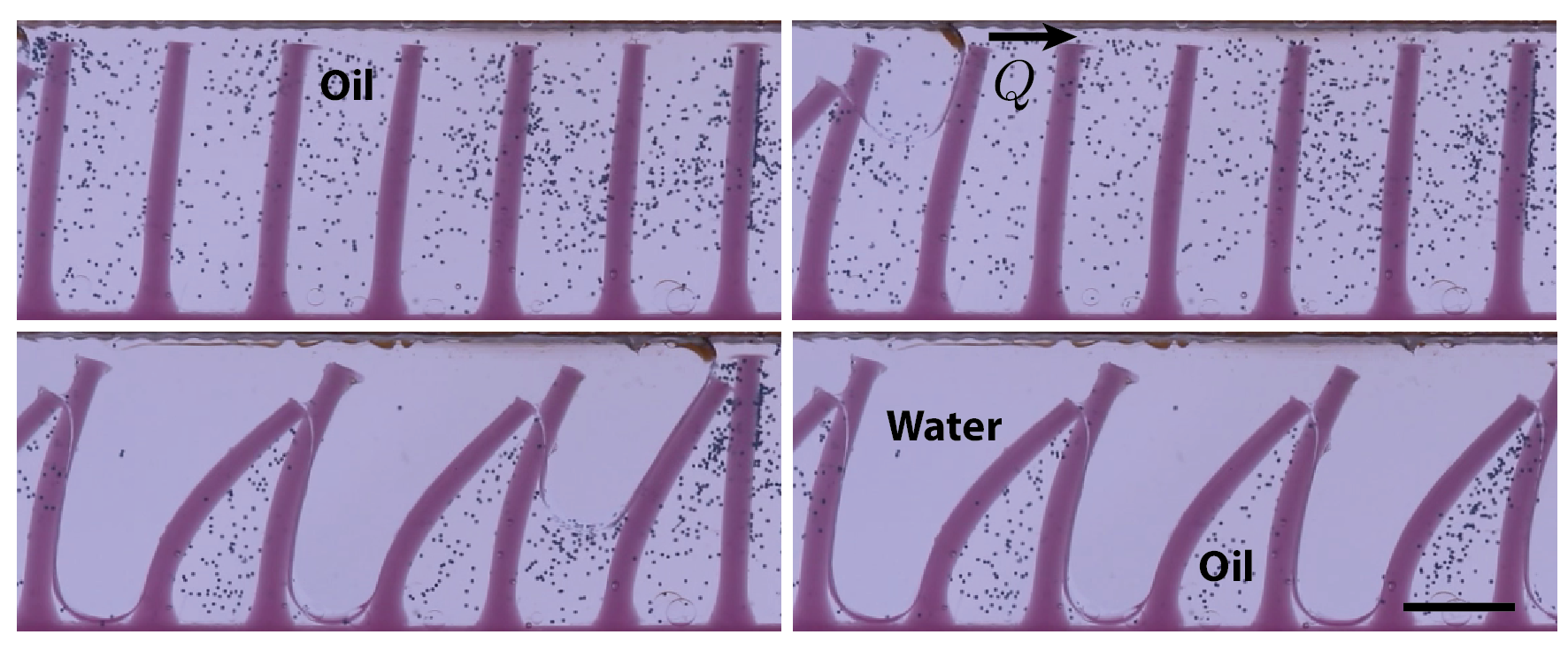
Natural systems are frequently textured with high-aspect ratio structures (e.g. cilia, fur) which are subject to forces associated with complex and interfacial flows. In this project I studied the mechanics of confined capillary flows through arrays of flexible fibers. In my study published in Physical Review Fluids, I address questions including: how does a moving contact line navigate deformable obstacles? How do elastocapillary effects impact the maximum drainage of an intial layer of fluid from a system?
Liquids & Elasticity Lab, 2022
hele-shaw painting
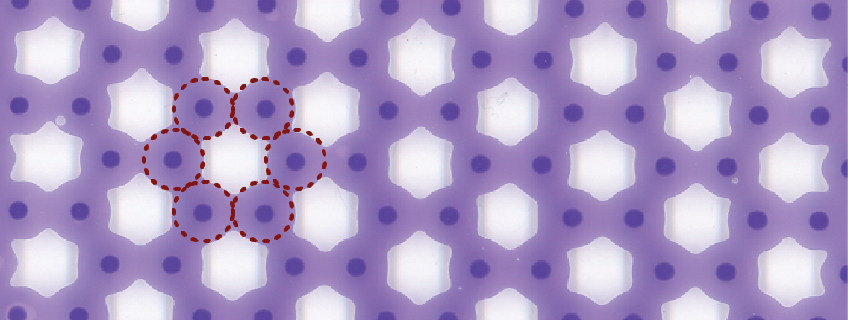
Confined capillary flows, i.e. the invasion of a fluid into a narrow geometry, are subject to forces related to the contact between fluid interface and confining substrate. In my article published in Advanced Materials, I demonstrate capillarity as a fabrication tool for designing multi-functional thin films. In this system, fluid is spontaneously drawn into a Hele-Shaw cell due to capillary suction. I studied the resultant pattern formation when inlet ports are templated. On larger scales, the interactions between neighboring flows lead to tessellations and, more generally, designs that directly correspond to a graphical transform of the initial inlet configuration. Furthermore, I model the shape of droplets trapped within the fluid matrix as viscous forces resist surface tension-driven shape minimization. Upon freezing the trapped fluid, typically via a curing agent, the film can be then removed from the cell for use, presenting a framework for the fabrication of composite materials with localized mechanical properties.
Liquids & Elasticity Lab, 2024
other works
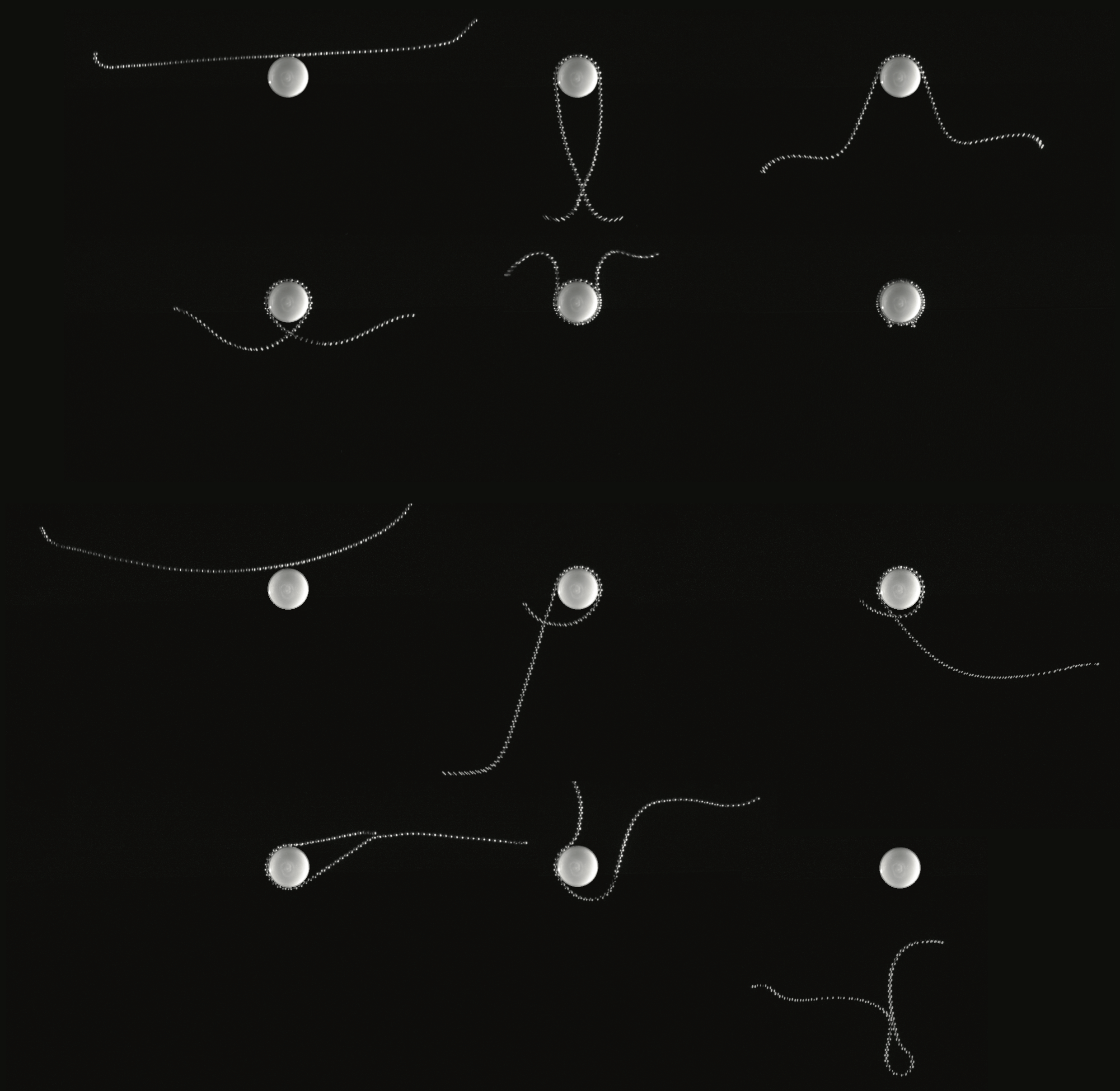
Other questions in my career include: how do fibers in flow navigate networks of obstacles in the context of filtration? How do contact networks form in dense, particle-laden suspensions during shear thickening? How does the deforamtion of an array of fluid-saturated hairs affect deposition, i.e., what are the physics of a paintbrush when pressed against a surface?
selected talks